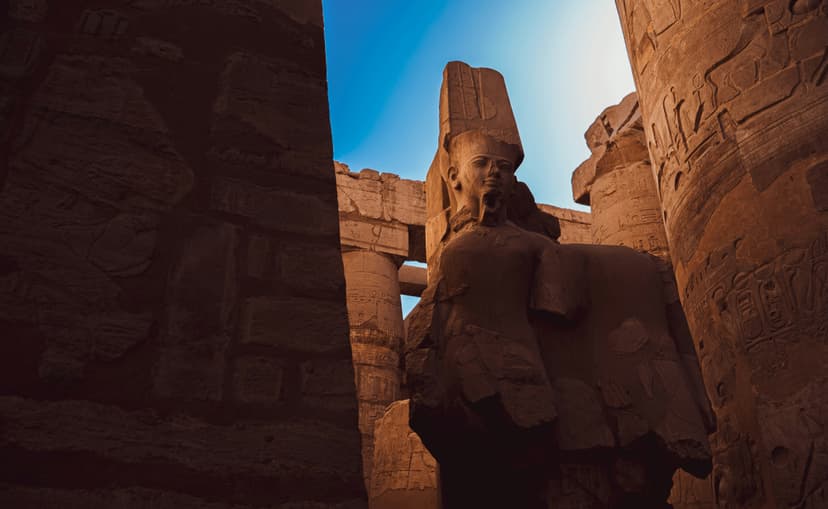
Annual subscription

ANCIENT EGYPTIAN FESTIVALS

When Sirius rises and the Nile floods, the Egyptian year begins — live every sacred festival from Wepet Renpet to the Epagomenal birthdays of the gods, with scholarly depth, mythic wonder, and the stars as your guide.

$5/yearly
Auto-renews. Skip or cancel anytime.By subscribing you authorize annual charges until you cancel.
VisaMastercardAmexPayPal

THE PROCESS

HOW IT WORKS

Enter the Sacred Cycle
01

Enter the Sacred Cycle

Subscribe and unlock access to the pharaonic calendar—festivals, astronomical events, and divine celebrations spanning 3,000 years of Egyptian tradition.

Align with the Cosmos
02

Align with the Cosmos

Sync the Egyptian calendar to your digital life. Watch as festivals of Isis, Osiris, and the Nile's rhythms appear alongside your modern schedule.

Honor the Eternal
03

Honor the Eternal

Receive notifications with stargazing tips, meditation prompts, and modern rituals inspired by ancient practices. Connect with the timeless wisdom of the pharaohs.

What You Receive

Ancient Egypt's ritual calendar is among the best-documented in the ancient world. Between the Ebers Calendar (c. 1550 BCE), festival lists inscribed on temple walls at Karnak, Edfu, Medinet Habu, and Esna, Plutarch's detailed account of the Osiris myth, and the Ptolemaic-era festival calendars preserved on papyrus, we have evidence for well over a hundred annual observances spanning three thousand years. The Egyptian year was structured around three seasons dictated by the Nile — Akhet (Inundation), Peret (Emergence/Planting), and Shemu (Harvest) — giving every festival a concrete agricultural and astronomical anchor. The sheer variety of celebrations (cosmic new-year rites, multi-week temple processions, funerary pilgrimages, mystery plays reenacting divine death and resurrection, harvest thanksgivings, apotropaic snake festivals) means every month offers something surprising. And because Egyptian religion profoundly influenced Greek, Roman, and early Christian traditions — Isis worship spread across the Mediterranean, the Osiris resurrection narrative echoes in later theology, and the 365-day calendar became the basis of the Julian system — subscribers constantly discover connections between pharaonic Egypt and the world they live in today.

Wepet Renpet, the Opet Festival, and the Beautiful Feast of the Valley — Egypt's greatest celebrations brought to life

The three seasons of the Nile — Akhet (Inundation), Peret (Planting), and Shemu (Harvest) — as a living framework

Temple processions, mystery plays, and divine barque journeys with vivid ritual detail

SAMPLE EVENTS

A glimpse into the sacred days you will uncover.

Wepet Renpet — The Opening of the Year

Wepet Renpet — The Opening of the Year

July 19

The Egyptian New Year — Wepet Renpet, "opening of the year" — was triggered not by a human decree but by the sky itself: the heliacal rising of Sirius (Sopdet to the Egyptians), the moment after seventy days of invisibility when the brightest star in the sky reappeared on the eastern horizon just before dawn. The Egyptians observed that this astronomical event reliably preceded the annual Nile inundation by a matter of weeks, making Sirius literally the harbinger of life, flood, and fertility. At Karnak and other major temples, priests calculated this rising carefully and announced the new year with offerings, hymns, and the ceremonial opening of the temple's innermost sanctuaries. Sopdet was depicted as a woman with a five-pointed star crown and identified with Isis in her role as the force that renewed life — her tears falling as the Nile. Modern sky-watchers can still observe the heliacal rising of Sirius in July from southern latitudes, the same celestial signal that set Egyptian civilization's rhythms for three thousand years.
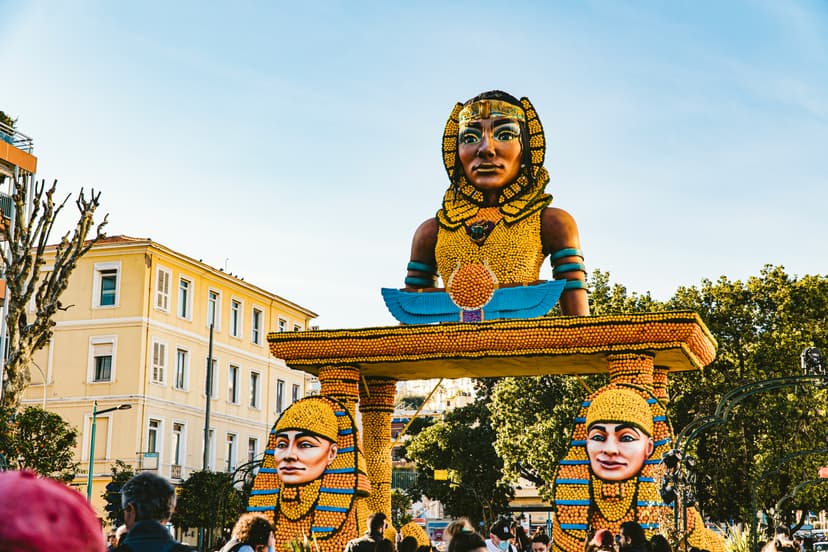

Opet Festival — The Great Procession from Karnak to Luxor

Opet Festival — The Great Procession from Karnak to Luxor

July 25

The Opet Festival was the grandest public celebration in the pharaonic year — a spectacular procession lasting between eleven and twenty-seven days in which the cult statues of Amun, Mut, and Khonsu were carried in gilded barques from Karnak Temple to Luxor Temple, a journey of nearly two miles along the sphinx-lined avenue or by river barge on the Nile. The purpose was the ritual renewal of the pharaoh's divine ka: within Luxor Temple's inner sanctum, the king communed with Amun and emerged spiritually recharged, his right to rule reaffirmed by the god himself. Reliefs on the walls of Luxor Temple and the Red Chapel of Hatshepsut at Karnak preserve the festival in vivid detail: Nubian dancers, acrobats, musicians playing drums and sistra, soldiers in formation, and ecstatic crowds receiving bread, beer, and roasted oxen distributed from royal storehouses.

Day of the Tekh Festival — Sacred Drunkenness

Day of the Tekh Festival — Sacred Drunkenness

July 28

The Tekh Festival, or "Festival of Drunkenness," was a New Kingdom celebration closely associated with the myth of the pacification of Sekhmet-Hathor. On this day, ritual intoxication was not merely permitted but religiously required: participants drank large quantities of beer mixed with mandrake and lotus, danced, sang, and fell asleep in the temple precincts, reenacting the moment when the rampaging Sekhmet drank the blood-red beer and fell into a peaceful stupor, transforming back into the gentle Hathor. Archaeological evidence from the temple of Mut at Karnak includes a "porch of drunkenness" built by Hatshepsut, and excavations have revealed long halls with columns designed to accommodate large numbers of sleeping revelers. The festival carried a serious theological message: the boundary between destruction and creation, fury and love, Sekhmet and Hathor, was as thin as a cup of beer.

Why subscribers love it

Each summary weaves four threads together: the mythological story behind the festival, the specific deity or deities honored, one vivid sensory or ritual detail drawn from temple inscriptions or archaeological evidence, and the astronomical or agricultural significance that made the event matter to real people farming the Nile floodplain. The result is not a dry encyclopedia entry but a window into what it felt like to live inside a civilization that saw the cosmos as alive, the river as divine, and every star as a god's announcement.

Feel the pulse of a civilization that synchronized its entire life — agriculture, religion, governance — to the stars and the river

Discover why the heliacal rising of Sirius mattered more to the Egyptians than any pharaoh's decree, and watch for it yourself in July

Meet gods and goddesses beyond the famous few — Nehebkau the snake protector, Renenutet the cobra harvest guardian, Sopdet the star who announced the flood

Every event is cross-referenced to primary sources and museum collections, so you can follow each thread from your calendar into the deep archive of Egyptology

FAQs

The Egyptian civil calendar drifted against the solar year by about one day every four years until the Ptolemaic reform, so festival dates given in Egyptian months must be converted to approximate modern equivalents. We follow standard scholarly conversions (placing Wepet Renpet at the heliacal rising of Sirius, c. July 19) and note uncertainty where it exists. Regional variation was significant — a festival celebrated at Thebes might fall on a different date at Memphis — and we default to the best-attested Theban or national calendar. Some festivals are known only from single inscriptions or late-period sources; we flag these cases.

What do I receive each month with the Ancient Egyptian Festivals Calendar?

You receive a curated set of 2-3 events with dates, context, and links to reputable sources. Import the provided ICS file to keep everything in your preferred calendar app.

Can I cancel anytime?

Yes. Cancel with a single click before your next billing date and you will not be charged again.

How accurate is the research?

We cite public, reputable sources and call out where historians or communities disagree. When dates vary by source, we choose a standard reference and note it for you.

How do I add the ICS to my calendar?

Download the ICS file and import it into Google Calendar via Settings → Import, or into Apple Calendar by double-clicking the file on Mac or tapping it on iOS.

Subscribe – $5